

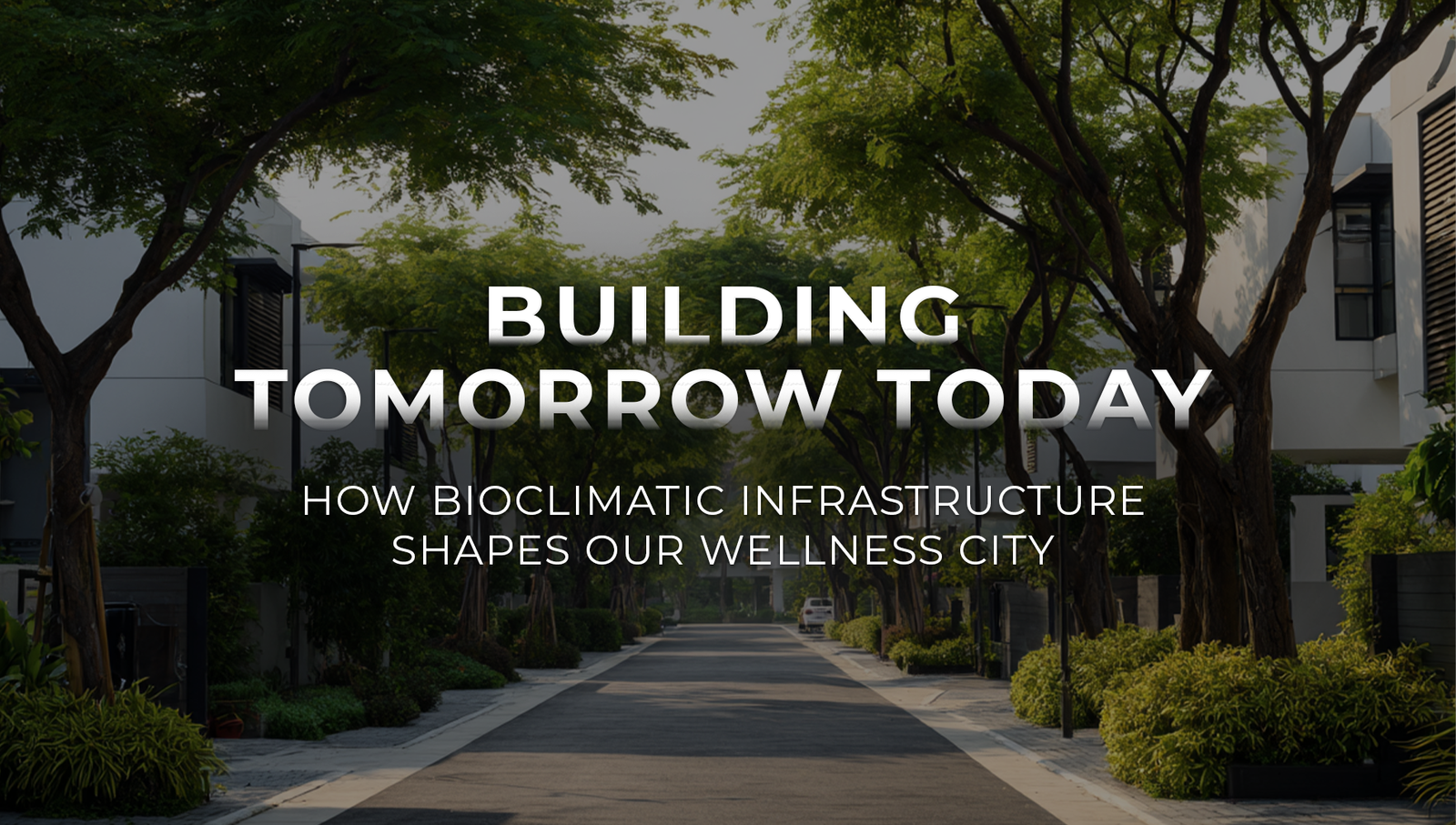
We still remember the first time we spoke to a group of homebuyers about the idea of a city shaped by the sun, the wind and the land itself.
Their expressions said everything. In India, the concept of bioclimatic infrastructure was almost unheard of. People asked the most detailed questions because this is who we are as a nation. Before we adopt something new, we explore it, break it down, ask again and again until we understand what we are investing in. We are a population that connects deeply with the choices we make, especially when it comes to our homes and our future. That is exactly why it took time for this idea to find its place.
At PLPB, we knew we were bringing something unfamiliar, something that would need careful explanation and patient conversation.
We weren’t simply designing a township. We were building a living system for future generations. And meaningful ideas take time to be understood.
The word infrastructure usually brings to mind images of cement, tools and construction teams. But what we were creating was shaped by nature just as much as by human hands. Our wellness city grew from a philosophy that looked beyond the present moment. It came from a question we asked ourselves early on. How do we create a township that respects the land, nurtures the people and stands resilient for decades to come?
This is where the idea of a bioclimatic township emerged. It wasn’t a concept we arrived at in an instant. It was something we reflected upon, researched and revisited repeatedly. Because designing responsibly is not only about the people who will live there but also about the environment that will cradle their everyday life.
Every road we lay, every home we plan, every open space we introduce leaves an imprint on the planet. We wanted that imprint to be gentle, intelligent and sustainable.
The heart of our approach lies in bioclimatic design, a concept rooted in working with the climate instead of fighting it. It is not a trend. It is a return to our roots. For centuries, Indian homes naturally aligned themselves to sunlight, wind direction and seasonal shifts. Courtyards, shaded verandahs, clay materials and cross-ventilation were once part of our instinctive architectural wisdom. Modern construction pushed these away for some time, but today the need to reconnect with nature is stronger than ever.
This is what bioclimatic design brings back. It studies the climate of a region and shapes the built environment accordingly. It understands where the sun rises and sets and uses that knowledge to warm a space naturally or cool it efficiently. It reads the direction of the wind and creates pathways that allow fresh air to flow freely. It uses natural materials in intelligent ways so homes breathe and age gracefully. It reduces dependence on artificial heating, cooling and lighting because the environment itself becomes part of the architecture.
When we began to incorporate this thinking at PLPB, the transformation of the wellness city felt organic. We were not just placing buildings in an empty landscape. We were choreographing a living experience.
Homes were designed to maximise shade in summers and welcome sunlight in winters. Streets were aligned to encourage natural wind movement. Green corridors were introduced to cool the surroundings and create healthier microclimates. Water bodies were placed strategically so evaporation could support natural cooling. Walkways were shaded with tree species chosen not only for beauty but for their seasonal behaviour and ecological value. Each design element was intentional.
By grounding the township in climate-responsive architecture, the lifestyle it supports becomes naturally healthier.
Residents enjoy fresher air, softer temperatures and a sense of harmony that is almost impossible to create through mechanical solutions alone. Children grow up in environments where nature is not something to visit but something to live with daily. Families feel the calm that only well-balanced surroundings can offer. The township itself becomes an ecosystem of wellness.
Environmentally, the impact is equally profound. Reduced reliance on artificial cooling and heating means lower energy consumption. Using natural light smartly brings down electricity usage during the day. Materials chosen for their thermal comfort ease the load on mechanical systems. Rainwater harvesting, permeable surfaces and landscape planning protect the land rather than strain it. When we design with environment-sensitive planning, sustainability becomes the foundation.
For us at PLPB, this is not just about architecture. It is about responsibility. It is about creating a city where the next generation will not have to pay the price for today’s choices. A city where nature is not compromised, where wellbeing is not an afterthought and where innovation begins with awareness.
As more people began to understand the science and the purpose behind bioclimatic infrastructure, acceptance grew. Conversations shifted from doubt to curiosity, from curiosity to appreciation. Today, The Wellness City stands as a testament to what is possible when design listens to climate, when development respects nature and when people place trust in a vision built with intention.
India may have taken time to embrace the idea. That time was worth it. Because every step of explanation, every question asked, and every conversation held shaped this project into something thoughtful and deeply rooted. And in a country where decisions come from the heart as much as the mind, this journey made the wellness city stronger.
Bioclimatic architecture is not just a design strategy. It is a promise. A promise that the homes we build will protect not only the people who live in them but also the world beyond their walls. A promise that tomorrow will be healthier because today we chose to build with wisdom.
And that is a future we are proud to be creating at The Wellness City, India’s first bioclimatic township by PLPB.
