

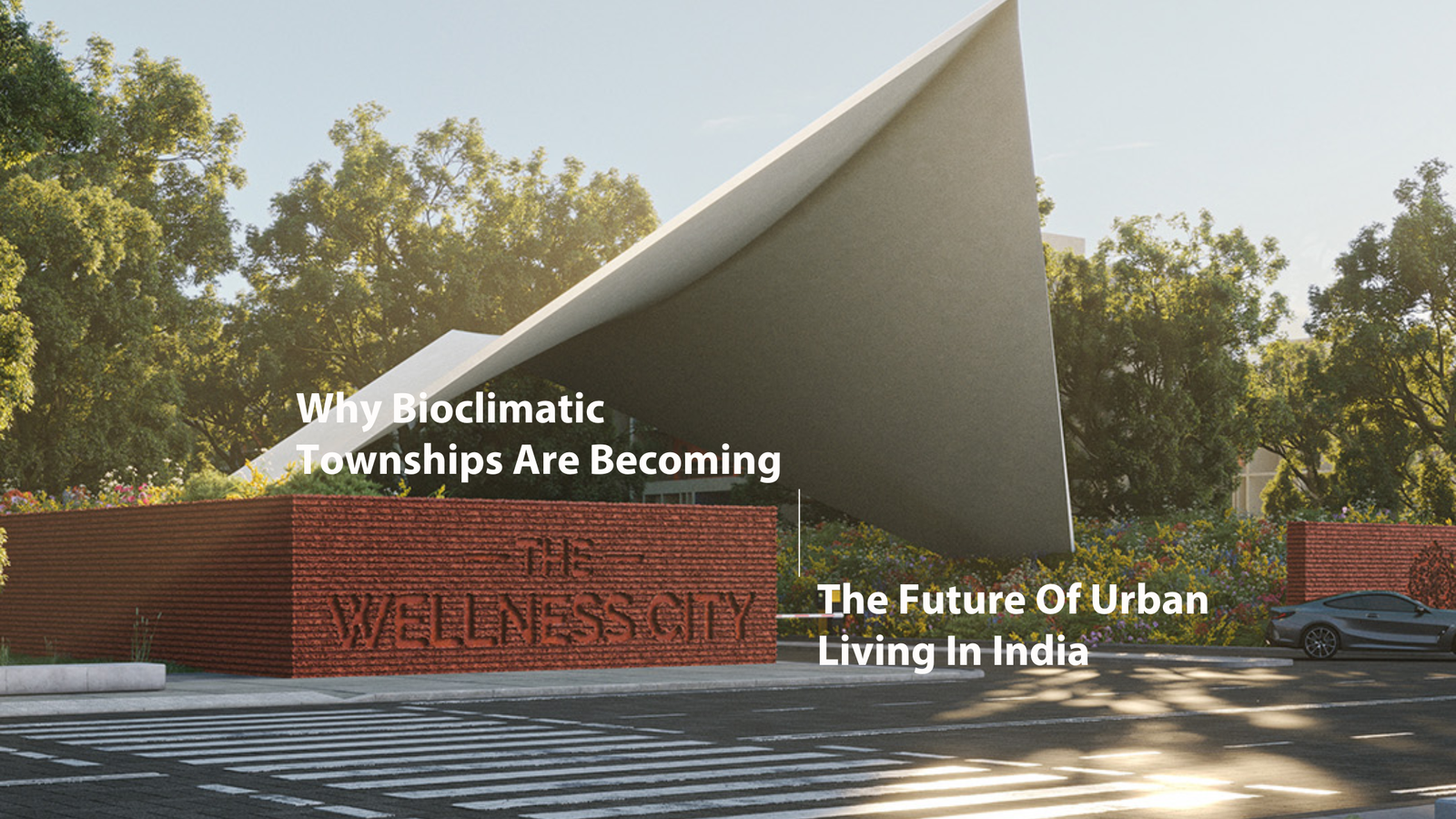
Across India, the idea of a “good home” is changing rapidly. Earlier, people looked at square footage, luxury amenities, or location alone. Today, families in Punjab, Chandigarh, Delhi and Mumbai are beginning to ask more important questions when it comes to buying their house.
Does this home get enough natural sunlight?
Will the apartment remain naturally comfortable through changing seasons?
Is there enough ventilation and green space?
Can this township genuinely improve daily wellbeing?
This shift is exactly why bioclimatic townships and wellness-focused communities are emerging as one of the strongest trends in Indian real estate.
People no longer want homes that simply look modern. They want homes that feel healthier to live in.
The rise of wellness real estate is becoming a global movement. According to the Global Wellness Institute, the global wellness real estate market reached nearly $584 billion in 2024 and is expected to cross $1.1 trillion by 2029.
India is naturally becoming a major part of this transition.
After the pandemic, urban buyers became far more conscious about air quality, open spaces, natural light, and mental wellbeing. Cities like Delhi and Mumbai especially experienced how stressful dense urban living can become. Long commutes, pollution, closed apartments, and limited green spaces pushed many families to rethink what “quality living” truly means.
This is where bioclimatic architecture is changing the conversation.
Unlike conventional construction, bioclimatic living focuses on designing homes according to climate conditions. The orientation of buildings, airflow planning, sunlight management, shading systems, ventilation, landscaping, and thermal comfort are all planned carefully to reduce dependence on artificial cooling and lighting.
In simple words, a bioclimatic township is designed to work with nature instead of against it.
This becomes especially important in North Indian cities like Chandigarh and Delhi where summers are intense, while regions like Punjab experience both harsh heat and cold winters. In coastal cities like Mumbai, humidity and ventilation become major lifestyle concerns. Traditional apartment planning often ignores these realities.
Modern wellness townships are now solving this through:
- Cross ventilation planning
- Sunlight-optimized layouts
- Green corridors
- Walkable infrastructure
- Shaded outdoor spaces
- Better air circulation
- Lower heat absorption materials
- Nature-integrated community design
These elements may sound architectural, but residents experience them emotionally in everyday life.
A naturally lit home feels calmer.
A ventilated apartment feels fresher.
Walkable green pathways reduce stress.
Open spaces encourage healthier routines.
This is why wellness townships in India are attracting both homebuyers and investors.
Another major reason behind this demand is lifestyle fatigue. Urban professionals today spend most of their lives indoors inside offices, cars, elevators, and closed apartments. As a result, people are increasingly searching for communities that reconnect them with nature without compromising urban convenience.
Developers seem to be noticing this shift and making amends.
Integrated townships are now being planned around wellness ecosystems instead of only amenities. Earlier, projects highlighted clubhouses and swimming pools. Today, buyers are paying attention to airflow, density planning, green ratios, wellness infrastructure, and sustainable living features.
According to recent wellness market studies, Asia-Pacific is among the fastest-growing regions in wellness real estate growth globally.
India’s rising interest in wellness-oriented living is also strongly linked to younger homebuyers. Millennials and young families are prioritising long-term quality of life over purely decorative luxury.
Parents today are actively looking for healthier environments where children can spend more time outdoors instead of inside compact urban apartments.
This is especially visible around expanding urban belts near Chandigarh, Delhi NCR, Mohali, and emerging wellness corridors around major metropolitan cities.
Another important factor driving this trend is trust and transparency.
Modern buyers are far more aware than before. They carefully evaluate project approvals, legal clarity, and developer credibility. This is why RERA approved townships have become an important keyword in Indian real estate searches.
For buyers, RERA approval creates confidence around project timelines, transparency, and accountability. In wellness-focused projects where long-term planning matters significantly, this trust becomes even more important.
Interestingly, wellness communities are no longer seen only as luxury concepts. They are increasingly being viewed as practical investments.
People are beginning to understand that healthier planning can improve:
- Daily comfort
- Energy efficiency
- Mental wellbeing
- Community interaction
- Long-term property value
Globally, wellness real estate is growing significantly faster than conventional construction sectors.
India’s real estate future is likely to move in the same direction.
Over the next decade, buyers in cities like Mumbai, Delhi, Chandigarh, and across Punjab may increasingly prefer communities that combine:
- Nature
- Wellness
- Sustainability
- Climate-responsive design
- Walkable planning
- Everyday convenience
The future homebuyer is not only purchasing an apartment anymore.
They are choosing an environment.
And that is exactly why bioclimatic wellness townships are becoming one of the most important conversations in modern Indian real estate.
